

The Art of Saying No Without Explaining… There is a particular kind of exhaustion that comes from feeling as though every “no” needs a closing argument.
You know the feeling. Someone asks for your time, help, attention, energy, money, access, or emotional labor—and before you can answer, your mind starts assembling a case. You search for a reason that will sound acceptable. You soften it. You add context. You prepare for questions. You try to make your boundary comfortable for the person who is encountering it. The art of saying no begins when you pause long enough to remember that your needs matter too.
But a boundary is not a courtroom. You do not need to prove that your needs are valid before you are allowed to honor them. Practicing the art of saying no means letting your decision stand without turning it into a defense of your life, your time, or your priorities.
Learning to say no without explaining is not about becoming cold, selfish, or unavailable. It is about recognizing that your time and capacity are real, finite resources. It is about understanding that you can be caring without being endlessly accessible. And it is about giving yourself permission to choose what is right for you, even when someone else would prefer a different answer. At its heart, the art of saying no is an act of self-respect.
A simple no can be one of the most honest things you say.
Why We Feel We Owe an Explanation
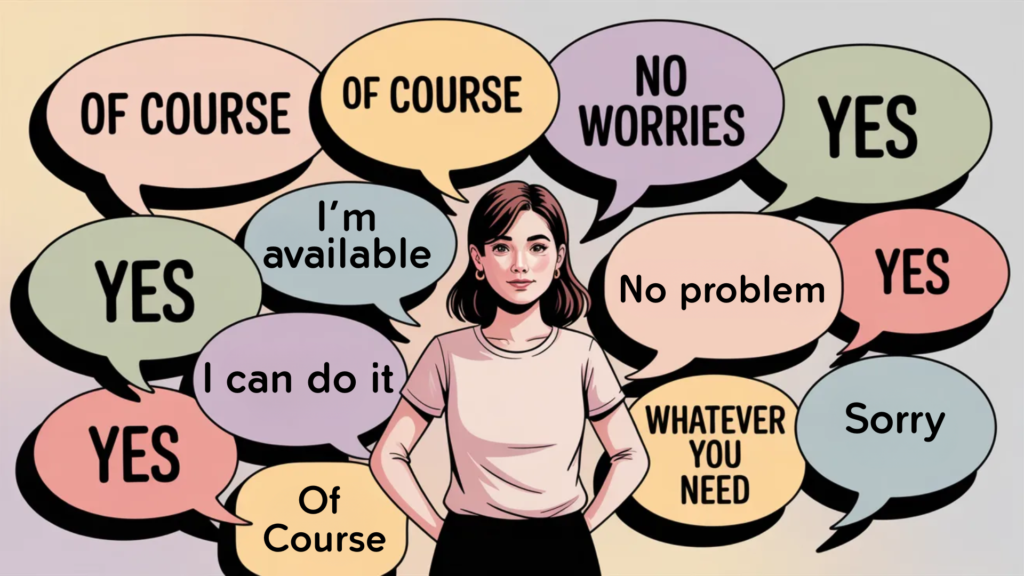
Many of us learned early that being “good” meant being agreeable. We were praised for sharing, helping, accommodating, staying quiet, being easygoing, and avoiding disappointment. So, as adults, declining a request can feel like we are doing something wrong—even when the request is unreasonable, poorly timed, or simply not something we want to do.
Explanations can feel like protection. If we have a convincing enough reason, perhaps the other person will not be upset. Perhaps they will not think we are selfish. Perhaps they will stop asking questions.
 The problem is that explanations often invite negotiation.
- “I can’t tonight because I’m tired” may lead to, “It will only take an hour.”
- “I don’t have the money right now” may lead to, “You can pay me back later.”
- “I’m busy this weekend” may lead to, “What about Sunday afternoon?”
When someone treats your reason as a problem to solve, the conversation moves away from your decision. Your no becomes something they believe they can work around.
That does not mean explanations are always bad. Sometimes you genuinely want to offer context, especially in close and trusting relationships. The important difference is choice. Share an explanation because you want to, not because you believe you must earn the right to say no.
No Is a Complete Answer
The phrase “no is a complete sentence” can sound blunt at first, especially if you are used to cushioning every refusal. But it is not a command to become harsh. It is a reminder that your consent, availability, and participation do not require a defense.
You can say:
- “No, thank you.”
- “I’m not available.”
- “That doesn’t work for me.”
- “I’m going to pass.”
- “I can’t commit to that.”
- “Not this time.”
- “I’m not able to help with that.”
Each of these is clear. Each is respectful. None requires you to reveal your schedule, your feelings, your health, your finances, your priorities, or the private details of your life.
A brief response may feel unfamiliar, but unfamiliar is not the same as unkind. You can be warm in your tone without making your boundary negotiable.
For example, instead of saying, “I’m so sorry, I have had such a long week and I promised myself I would rest because I’ve been overwhelmed lately, so I don’t think I can come,” you might say, “Thank you for inviting me. I’m going to stay in tonight.”
The second answer is still considerate. It simply does not hand someone a list of details to evaluate.
The Difference Between Privacy and Secrecy

Some people worry that declining without explanation means they are being secretive. It does not. The art of saying no includes understanding that you can be clear about your limits without opening every private part of your life for discussion.
Privacy is the right to decide what information belongs to you. You are allowed to keep parts of your life to yourself. You do not have to disclose your stress level, family circumstances, medical concerns, financial situation, relationship dynamics, or personal plans in order for your answer to count. Practicing the art of saying no means trusting that your boundary is valid, even when others do not know the reasons behind it.
Secrecy is often rooted in fear or deception. Privacy is rooted in self-respect.
You can care deeply about someone and still keep your internal world private. You can love your family and decline a visit. You can value your coworkers and refuse extra work. You can be a generous friend and decide that you cannot take another late-night call. Your relationship with someone does not erase your right to limits.
Actually, healthy relationships usually become stronger when people can be honest about their capacity. A connection built on resentment, overextension, or fear of disappointing someone is difficult to sustain. The art of saying no helps create relationships where respect, honesty, and personal space can exist together.
You Are Allowed to Disappoint People
This may be the hardest part.
Often, the fear beneath overexplaining is not really about the explanation. It is about disappointment. We fear someone will be annoyed, hurt, frustrated, excluded, or angry. We fear their feelings will become our responsibility.
But another person’s disappointment does not automatically mean you made the wrong choice.
People are allowed to feel disappointed when they do not get what they hoped for. You are allowed to make choices that they do not like. Both things can be true at the same time.
You do not need to rush in and fix every uncomfortable feeling. You do not need to reverse your decision because someone sighs, goes quiet, says “okay…” in a pointed way, or asks why repeatedly. You can acknowledge their feeling without surrendering your boundary.
Try phrases like:
- “I understand that this is disappointing.”
- “I know that wasn’t the answer you were hoping for.”
- “I hear you, but my answer is still no.”
- “I’m not able to do that.”
These responses do not deny the other person’s emotions. They simply refuse to make those emotions the deciding factor.
The Power of a Pause
One of the simplest ways to stop overexplaining is to stop answering immediately.
When a request catches you off guard, your nervous system may go into people-pleasing mode. You may say yes before you have checked your calendar, your energy, your budget, or your actual desire. Then you may feel trapped, resentful, or forced to invent a complicated excuse later.
Give yourself a pause instead.
You can say:
- “Let me think about that and get back to you.”
- “I need to check my schedule.”
- “I can’t answer right now.”
- “I’ll let you know tomorrow.”
A pause creates space between someone else’s request and your response. In that space, you can ask yourself a few honest questions: Do I want to do this? Do I have the capacity? Would I agree if I were not worried about being disliked? What will saying yes cost me?
You do not need a dramatic reason to decline. “I do not want to” and “I do not have room for this” are enough, even when they remain private thoughts.
How to Handle Pushback
Not everyone will accept a boundary gracefully. Some people are accustomed to having access to you. Others may be uncomfortable because your new clarity changes a pattern that worked in their favor.
Pushback does not mean your boundary is wrong. It often means the boundary is being noticed.
If someone asks for more information, you do not need to invent a better explanation. You can repeat yourself. This is sometimes called the “broken record” approach: calm, brief, and consistent.
For example:
Them: “Why can’t you come?”
You: “I’m not available.”
Them: “But what are you doing?”
You: “I’m keeping my plans private, but I won’t be able to make it.”
Them: “You always cancel.”
You: “I understand you’re frustrated. I’m still not available.”
You do not have to match their intensity. You do not have to defend yourself against every accusation. A boundary becomes clearer when you stop trying to persuade someone to agree with it.
If a person repeatedly pressures you, guilt-trips you, or punishes you for saying no, that is useful information. It may reveal that they were more comfortable with your lack of boundaries than with your wellbeing.
Saying No With Kindness
 A direct no does not have to be cruel. Kindness can live in the greeting, the tone, and the gratitude—not necessarily in a long explanation.
You might say:
- “I appreciate you thinking of me, but I’ll pass.”
- “Thanks for asking. I’m not available for that.”
- “I’m honored you reached out, but I can’t take this on.”
- “I’m not the right person for this, but I hope you find the support you need.”
- “That won’t work for me. I hope it goes well.”
Notice that none of these promises more than you can give. They do not offer a vague “maybe” when you mean no. They do not invite a debate. They communicate respect while protecting your own space.
You can also choose not to offer alternatives. Suggesting another date, another person, or another solution can be generous when you truly want to do it. But it is not required. You are not obligated to solve a problem simply because you declined to take it on yourself.
Practice in Low-Stakes Moments
If saying no without explaining feels impossible, begin small. You do not have to start with the most emotionally complicated relationship in your life.
Practice declining an optional invitation. Say no to a store promotion. Turn down a meeting that does not need your presence. Let a nonurgent message wait until you have the energy to respond. Choose the restaurant you actually want rather than saying, “Anything is fine.”
These moments build evidence that the world does not end when you disappoint someone a little.
At first, you may feel guilty after setting a boundary. That feeling is common, especially when you are changing a long-standing habit. Guilt is not always a signal that you have done something harmful. Sometimes it is simply the discomfort of doing something new.
Try not to treat guilt as an instruction. Let it be a feeling that passes through you, not a command that sends you back to overexplaining.
Your No Makes Room for Your Yes

Every yes carries a cost. It takes time, attention, energy, money, emotional bandwidth, or rest. When you say yes automatically, you may eventually find yourself with very little left for the people and projects that matter most to you—including yourself.
A no is not only a rejection. It is also protection.
It protects your rest when you are tired. It protects your focus when your work needs you. It protects your finances when a purchase is not wise. It protects your emotional health when a conversation feels draining. It protects your relationships from the quiet resentment that grows when you agree to things you do not want to do.
And it makes room for a more meaningful yes.
When you choose your commitments intentionally, your yes becomes more reliable. You are less likely to show up depleted, distracted, or resentful. You can give more honestly because you are giving from capacity, not obligation.
A Gentle Reminder
You do not need to become a different person to set better boundaries. You do not need to stop being caring, thoughtful, generous, or considerate. You only need to include yourself among the people you care for.
There will be times when an explanation feels right, and you can offer one freely. There will also be times when the most loving thing you can do—for yourself and for the relationship—is answer simply and let the answer stand.
“No” can be quiet. It can be warm. It can be brief.
- It can sound like, “Not today.”
- It can sound like, “I’m not available.”
- It can sound like, “That doesn’t work for me.”
- And it can be enough.
The art of saying no without explaining is not about shutting people out. It is about coming home to yourself. It is about trusting that your needs do not become legitimate only when someone else understands them. It is about remembering that you are allowed to have limits, to protect your peace, and to make room for the life you want to live.
You are not difficult for having boundaries.
You are human. And that is reason enough.
Thanks for diving into the art of saying “No” with flair! Ready for more? Check out this thrilling read on unleashing your true self: https://jupjupnoy.com/unleash-your-authentic-self/.












0 Comments