
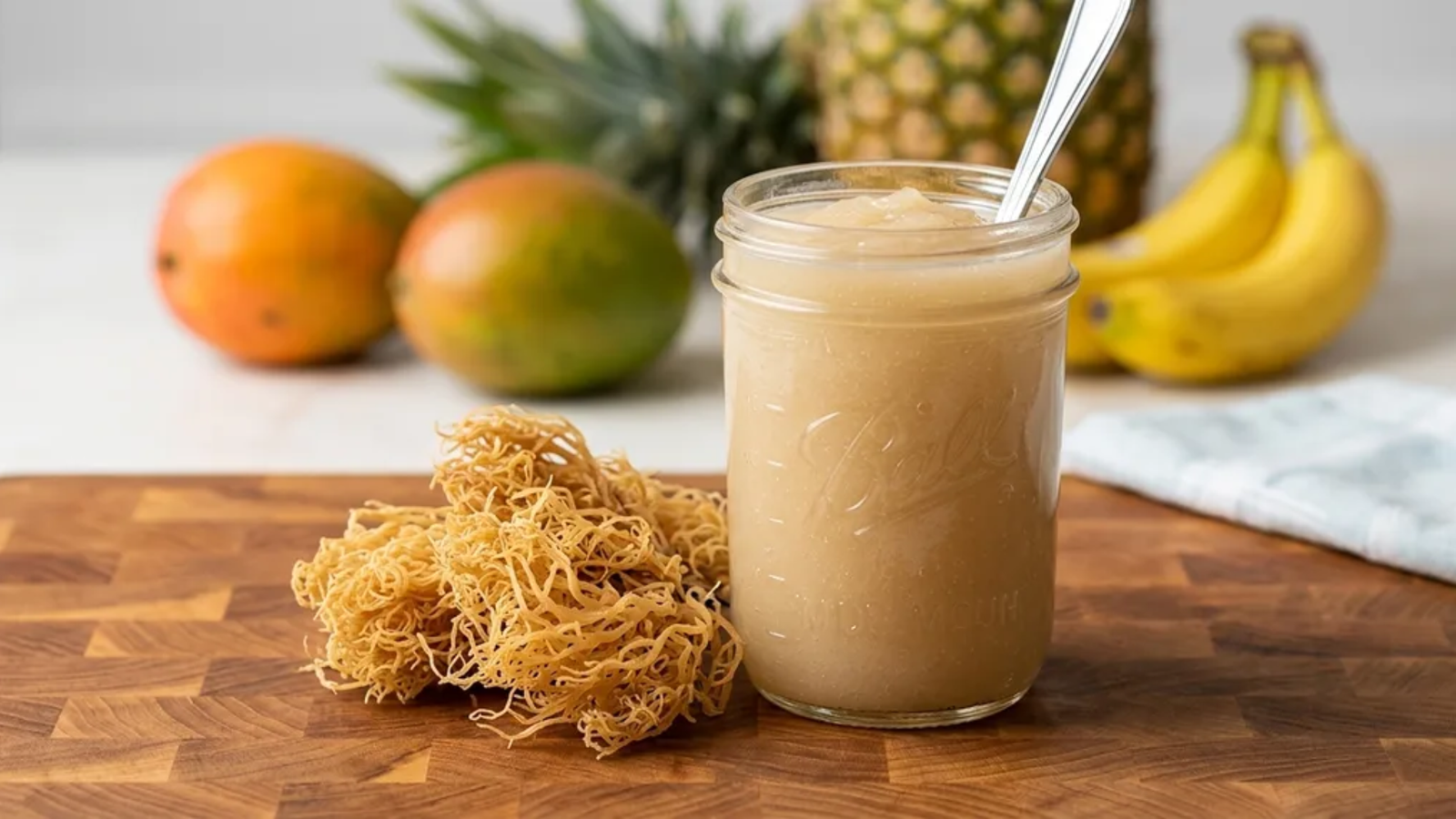
How A Childhood Staple Became A Global Wellness Trend—And How To Make Your Own The Right Way
There’s something funny about watching the world “discover” something you grew up with.
Sea moss—Irish moss, as my mother used to call it—is one of those things. Long before it showed up in health stores, influencer reels, and $30 jars labeled “superfood gel,” it was already a staple in many Caribbean homes. In mine, it showed up like clockwork every other Sunday.
We didn’t call it a trend. We called it a spiced drink, punch or an addition to breakfast.
It wasn’t something that got rushed. There was a natural rhythm to it—a process you learned just by watching. From soaking to blending to getting the flavor just right, everything had its place. You could tell it was done right before even tasting it. The texture said everything.
My mother would take her time with it. Sea moss, milk, condensed milk, a little sugar if needed, nutmeg, cinnamon, vanilla—and sometimes, just sometimes, a splash of Guinness stout. What came out was rich, smooth, and slightly thick, somewhere between a drink and a porridge. The kind of thing that made you stop after the first sip and just take it in.
It wasn’t just something to eat—it stayed with you. You didn’t question it or break it down into nutrients. It was simply part of the routine, something that felt right and did what it was supposed to do.
Back then, nobody was talking about gut health, minerals, or amino acids. You just knew it was good for you—and that it tasted good.
Now fast forward to 2025–2026, and sea moss is being presented like a brand-new discovery. New packaging, bold claims, higher prices—but for some of us, it’s just something familiar showing up in a different form.
Before getting pulled into the hype, it’s worth understanding what it really is, where it comes from, and why it’s been around this long.
Let’s take a look at that—and how to make it yourself without paying a premium for something that was always meant to be simple.
Where Sea Moss Comes From
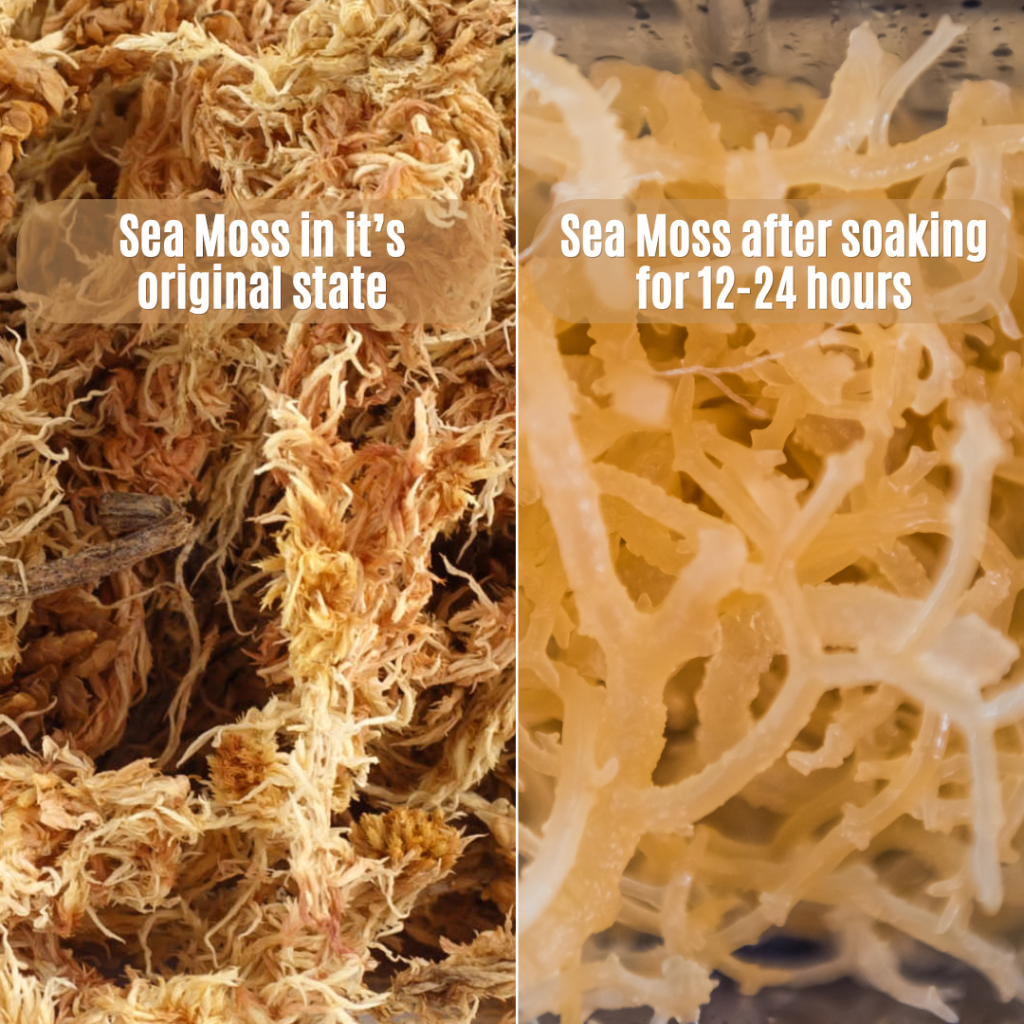
Dried and Soaked Sea Moss
Sea moss, scientifically known as Chondrus crispus, is a type of red algae that grows along the rocky Atlantic coasts of North America, Europe, and the Caribbean. In Ireland, it became popular during the 1800s, especially during the Great Famine, when people relied on it as a nutrient-dense survival food.
In the Caribbean, it evolved into something more cultural than survival. It became nourishment, tradition, and comfort all rolled into one.
That’s where the rich drinks, porridges, and tonics came from—recipes passed down, adjusted, and perfected over generations.
So no, this isn’t new. It’s just newly marketed.
Why Everyone Is Talking About Sea Moss
The renewed hype around sea moss comes down to one thing: nutrient density.
Sea moss is loaded with essential compounds your body needs to function properly. It’s often said to contain 92 of the 102 minerals the human body requires. Whether you want to debate the exact number or not, the reality is—it’s packed.
Here’s what stands out:
- Amino acids that support cellular repair and muscle function
- Vitamin C for immune support
- Vitamin A for skin and vision health
- Omega-3 fatty acids that support heart and brain health
- Antioxidants that help fight inflammation
- Key minerals like zinc, iodine, iron, magnesium, and potassium
That combination makes sea moss especially appealing for people focused on:
- Immune support
- Thyroid function (thanks to iodine)
- Skin health
- Digestive balance
- Energy levels
But here’s the thing most people don’t say clearly enough: sea moss isn’t magic.
It’s a supplement to a balanced lifestyle—not a replacement for one.
My Return to Sea Moss (2026 Edition)
Recently, I picked up a pound of dried sea moss from my local Caribbean Super Center. No branding hype, no premium label—just the real thing.
And instead of buying pre-made gel with a price tag that didn’t make sense, I went back to basics and made it myself.
If you’ve got a blender and a little patience, there’s no reason not to.
How to Make Sea Moss Gel (The Right Way)
Making sea moss gel is simple, but it does require proper cleaning and soaking. This is not something you want to rush.
- Place the dried sea moss in a large bowl and cover it with spring or filtered water. Massage it thoroughly to remove dirt, sand, and debris. Drain and repeat until clean.
- Add fresh filtered or spring water (do not use tap water) and make sure all sea moss is fully submerged.
- Let it soak at room temperature for 12–24 hours.
- After soaking, drain and rinse again.
- Add a portion of the softened sea moss to a blender along with your choice of sweetener (agave, maple syrup, date syrup or dates, remember to soak your dates), fruit, and filtered water.
- Blend until smooth.
- Transfer to an airtight mason jar and refrigerate.
Storage guidelines:
- Refrigerator: 2–3 weeks
- Freezer: up to 3 months (ice cube trays or freezer worthy containers works perfectly)
Daily intake recommendation:
- 1–2 tablespoons (about 4–8 grams)
How to Tell If Sea Moss Has Spoiled
Always check before using.
If your sea moss gel smells strongly fishy, sour, or shows signs of mold or discoloration, it’s no longer safe. Dispose of it immediately.
Good sea moss gel should have a mild, ocean-like scent—not overpowering.
Fruit-Infused Sea Moss Gel Recipes
Once you’ve made your base gel, this is where things get interesting.
These variations bring flavor, texture, and versatility—whether you’re eating it on it’s own, adding it to smoothies, spreading it on toast, or mixing it into oatmeal.
Tropical Pineapple Mango Sea Moss Gel
This one leans into that classic Caribbean flavor profile—bright, sweet, and refreshing.
Ingredients
- 1 cup plain prepared sea moss gel
- 1 cup mango chunks (fresh or frozen)
- 1 cup pineapple chunks (fresh or frozen)
- 1 tablespoon fresh lime juice (optional)
- Sweetener to taste
Blend until smooth and store as usual.
Strawberry Banana Sea Moss Gel
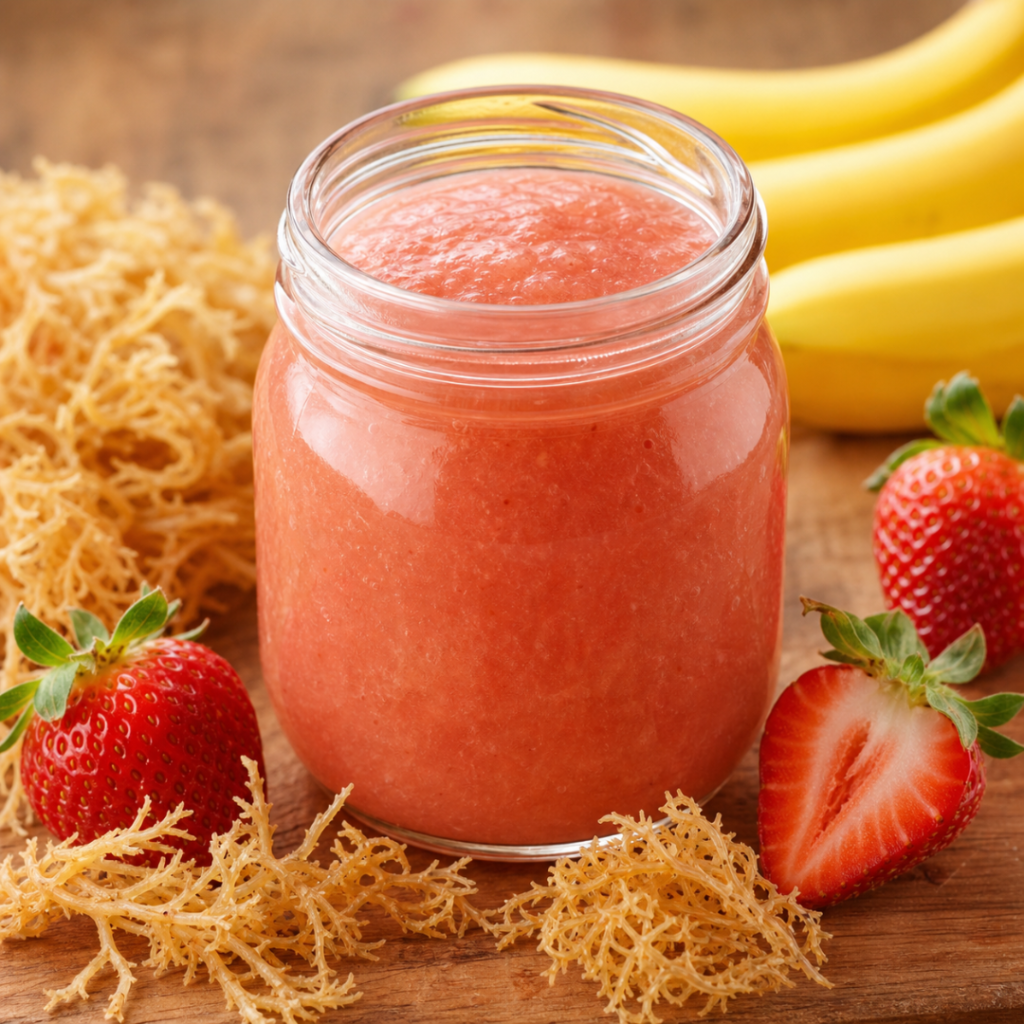
Strawberry Banana Sea Moss Gel
This is the most kid-friendly option—naturally sweet and smooth.
Ingredients
- 1 cup plain prepared sea moss gel
- 1 cup strawberries
- 1 ripe banana
- Sweetener to taste
The banana adds thickness and eliminates the need for heavy sweetening.
Mango & Strawberry “Sunrise” Gel
A balanced blend of tropical and berry flavors.
Ingredients
- 1 cup plain prepared sea moss gel
- 1 cup mango chunks
- 2 cups strawberries
- 1 teaspoon honey, maple syrup, or agave (optional)
This one has a natural sweetness that doesn’t need much help.
Wild Blueberry Lemon Gel
Bright, slightly tangy, and antioxidant-rich.
Ingredients
- 1 cup plain prepared sea moss gel
- 1 cup wild blueberries
- Juice of 1/2 a lemon
- Sweetener to taste
This variation pairs especially well with teas and morning smoothies.
Bonus: Sea Moss Drink (The Classic Reimagined)
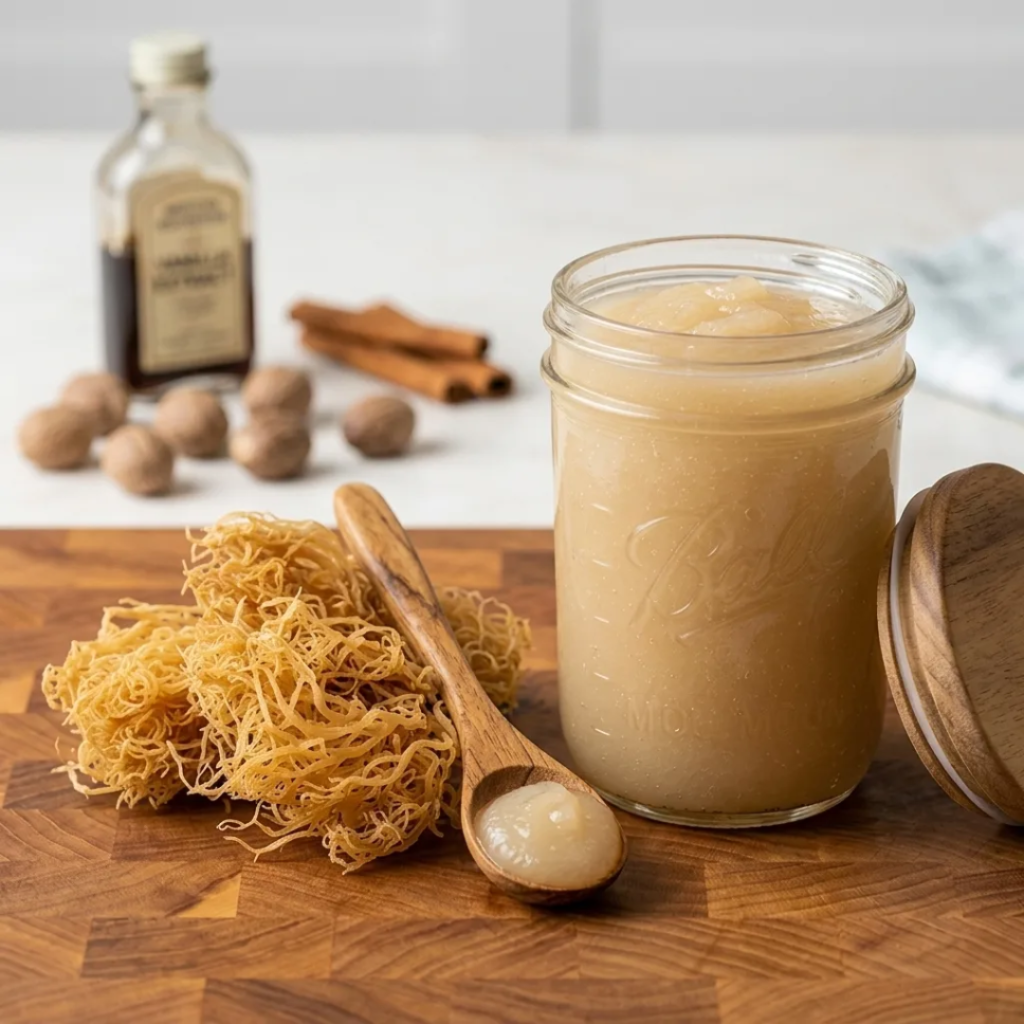
Sea Moss
This is the closest version to what I grew up on—just with a modern dairy-free twist.
Ingredients (single serving)
- 1 cup prepared sea moss gel
- 1 cup almond milk (or coconut milk)
- Coconut condensed milk (optional, to taste)
- ¼ cup sweetener (coconut nectar, agave, or maple syrup)
- ⅛ teaspoon nutmeg
- ⅛ teaspoon cinnamon
- 1 teaspoon vanilla
Blend everything until smooth.
If the consistency is too thick for you, thin it out with more almond or coconut milk.
If you want to take it back to the original experience, you can substitute dairy milk and condensed milk—but just know your stomach might have a different opinion than it did years ago.
Practical Tips From Experience
After making batches myself, a few things stand out:
- Always use filtered or spring water. It makes a noticeable difference.
- Don’t skip the cleaning process. Sand in your gel will ruin the experience.
- Keep your batches manageable. Smaller batches stay fresher.
- Freeze excess early. Don’t wait until it’s about to turn.
- Ice cube trays are your best friend for portioning.
Why Making It Yourself Matters
The biggest issue I see right now is pricing versus effort.
Pre-made sea moss gels are being sold at a premium for something that takes minimal equipment and a little time. When you make it yourself, you control:
- Ingredients
- Sweetness
- Flavor combinations
- Freshness
- Cost
And honestly, it just feels better knowing exactly what you’re putting into your body.
Final Thoughts
Sea moss didn’t need a rebrand—but it got one anyway.
For those of us who grew up with it, this isn’t about trends or marketing. It’s about reconnecting with something that was always there—simple, effective, and rooted in tradition.
If you’re new to it, take your time and do it right. Make it your own.
If you’ve had it before, you already know.
Sometimes the best things aren’t new—they’re just rediscovered.
Get Ready to Sip and Shine!
Hey there! I hope you have a blast whipping up this gel and start feeling healthier and more vibrant every day. And guess what? I’ve got another treat for you—a refreshing Caribbean drink to tickle your taste buds. Check out the recipe and dive into some island vibes! 🌴🍹












0 Comments